
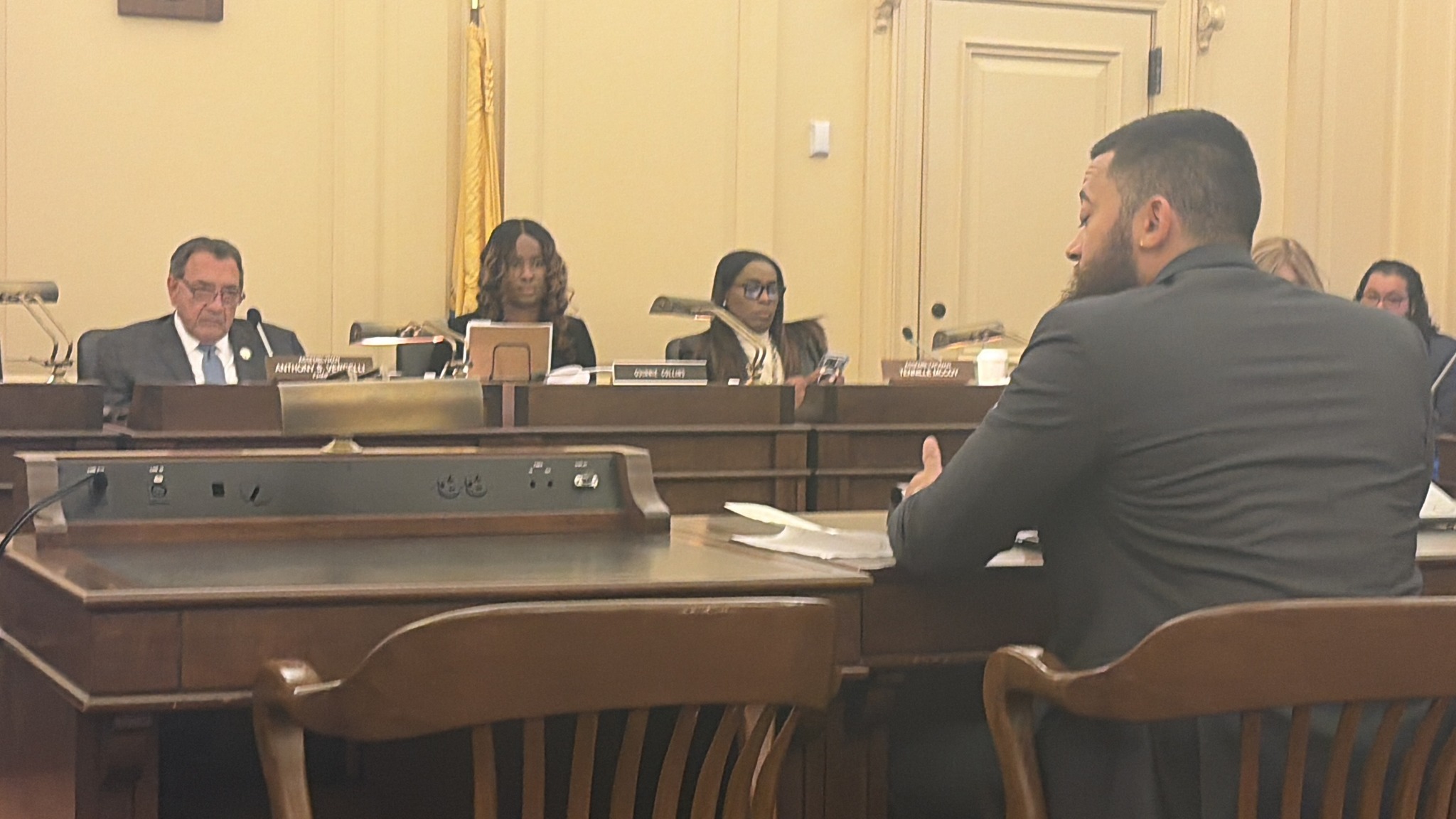
As Assembly Bill 1760 advances in Trenton, Isles Youth Institute’s Allen Killiebrew is making the case for why the legislation matters to the young adults he works with every day.
The bill, advanced by the Assembly Labor Committee on May 7, would direct the New Jersey Department of Labor and Workforce Development (DOLWD) to identify employment opportunities with minimal barriers to entry for people returning to the workforce after incarceration, and to post those opportunities on its website on an ongoing basis. Sponsors include Assemblyman Anthony Verrelli, Assemblywoman Verlina Reynolds-Jackson, and Assemblyman William Sampson IV, with co-sponsorship from Assemblywomen McCoy and Speight.
In its findings, the Legislature spells out the stakes plainly: employment is crucial for individuals returning from incarceration, and employed individuals are significantly less likely to return to prison because work enables successful reintegration. The bill also names the barriers that get in the way, including employer stigma around prior convictions and gaps in educational opportunity that limit a person’s ability to find quality work after release.
The mechanics are straightforward. DOLWD would build and maintain a public-facing list of jobs that have both minimal entry barriers and active demand for workers, and would post that information conspicuously on its website on an ongoing basis. The bill also requires every prisoner reentry program, organization, or other reentry entity operated by the state, a county, or a municipality, or that otherwise receives state funds, to report quarterly to DOLWD on employment partnerships, opportunities, and any other employment-related data the Commissioner of Labor and Workforce Development determines is needed. The act would take effect on the 90th day after enactment.
For Killiebrew, Lead of Career & Life Development at IYI and Extended Evening Day Program Coordinator, the bill is not abstract.
“As a career and life development coach working directly with 16- to 24-year-old young adults, you’re able to see not only the barriers growing up in inner city areas, in areas with elevated incarceration or people impacted either directly or indirectly,” he said in a recent interview. “You really just are able to sit back as you work with them and understand those barriers.”
IYI compresses what would typically be four years of high school into less than twelve months, working with young adults who, for a range of reasons including incarceration, did not finish school on a traditional timeline. Job placement is the next step, and that is where bills like A1760 meet the pavement.
“Let’s not waste someone’s time in an interview process for them to get an offer and then get a background check and then be declined simply because of that,” Killiebrew said. “This bill opens up more visibility, and it helps break those systemic barriers.”
He noted that the visibility A1760 would create has applications across Isles, citing colleagues including Andre Thomas at the Center for Energy and Environmental Training and Stacey Heading, whose work also intersects with reentry.
“This bill aligns with our mission by expanding opportunity and helping people, specifically young adults here at IYI, have a more promising pathway to long-term career success,” he said.
The legislation reflects something Isles staff already know from work across Trenton: interconnected services, from education to job training to family support, are what create an environment where people can grow and thrive after release. A1760 now heads to the full Assembly for consideration.