
Impact
We continually evaluate our interconnected services in order to improve and maximize their positive impact on our communities and people.
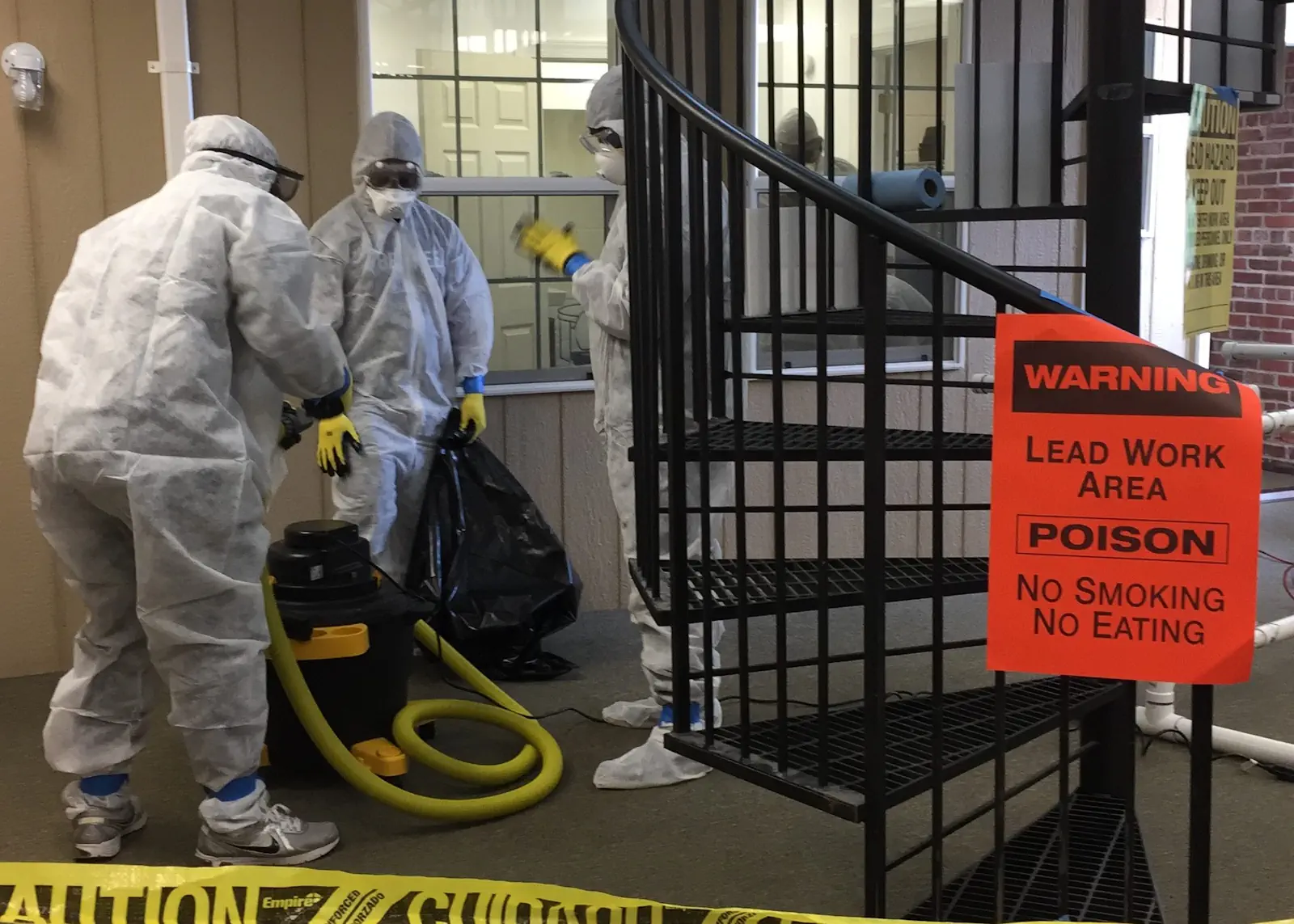
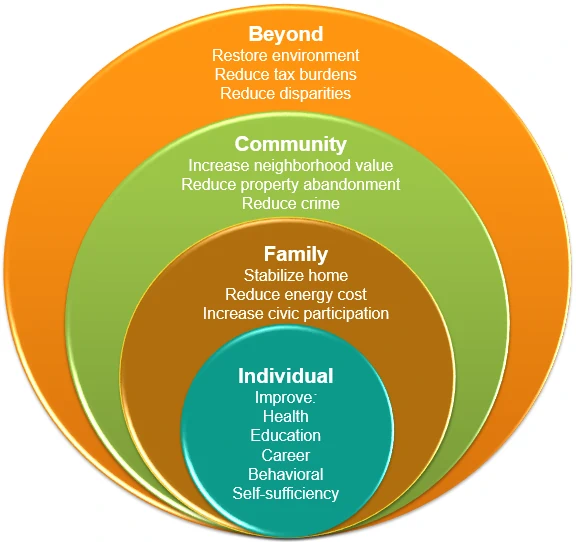
Where possible, Isles tracks the flow of benefits (impacts) from the interconnected services we provide to the community. For example, in the adjacent flow chart, we see how Isles’ Healthy Homes services provides immediate benefits to the home’s residents (including improvements in health, education, work, and self-reliance) that expands to family, the community, and beyond.
Tracking this flow allows researchers and our own evaluation metrics to determine if these service benefits are in fact occurring, the level of their (positive) impact, and to weigh their value against the cost of achieving them. When we engage external, large-scale research and meta-analyses, we can use the results to inform our ROI calculations. For example, research data shows that preventing permanent childhood lead poisoning yields a $17–$50 return (mostly to taxpayers) for every $1 we invest.
(Click to enlarge)
2025 Outcomes
Isles provides a variety of interconnected services to advance our core mission to create healthy environments where everyone in the community can grow and thrive. In 2025, we achieved great success toward our mission:
250+
Community gardeners supported dozens of gardens throughout Trenton, distributing over 800 pounds of fresh produce and 8,000 vegetable seedlings.
300
Healthy Homes assessments delivered, 70 lead hazard control projects completed, and 65 homes weatherized keeping 150+ families warm and dry.
60,000
Passengers transported via the GOTrenton! all-electric rideshare service, saving 50 metric tons of CO2 and 5,600 gallons of gasoline.
4,000+
Students escorted to and from school through Safe Passage, contributing to a 96% drop in violence at schools served since 2022.
400+
Adults trained in environmental health and energy efficiency careers through CEET, with 204 receiving lead-safety and building analyst certifications.
270
Trees planted (700 watered) across Trenton by Community Corps to advance climate resilience, shade equity, and neighborhood beautification.
297
People moved toward financial security; 63 became homeowners, others received coaching and employment support through our Financial Opportunity Center.
25
Students graduated from Isles Youth Institute with high school diplomas, earning 67 certifications in construction, solar installation, OSHA, and more.
500+
Community events hosted or supported by Isles teams, strengthening neighborhoods and building connections across Trenton.
While it is important to do innovative, good work locally, we want to impact the world. To do that, we seek to learn, share with others, and influence public and private policies.
With detailed testing and doing work on the ground to build thriving, healthy, sustainable communities, Isles learns how to improve policy ideas and priorities. Research, data and stakeholder insights help us more deeply understand the challenges and opportunities our communities face, what really works, and why. With this information, we help government, businesses, and the public learn and craft more effective policies, practices and education.
For example, starting 37 years ago, Isles began testing for lead in the soil to assure that our community gardens were growing healthy produce. As we learned about the pervasive threat of lead to community health, we began testing brownfield sites for potential contaminants. Working with community stakeholders, we began to explore the myriad ways that children were poisoned by lead. We tested hundreds of homes, eventually discovering that over half of them had so much lead in their dust that they threatened children living in them.
This realization, that homes were the most dangerous places for children to be, led us to research and develop low cost ways to remove the toxins from homes. We learned how Isles approach could be applied in settings across the state and country. We helped the New Jersey government adopt new ways to support and fund lead remediation and abatement. We also discovered new techniques to include energy savings home retrofits while we made them safe and healthy. Isles also learned to train local contractors to perform this work, expanding jobs and direct economic benefits for local residents and workers.
Today, Isles supports lead and healthy homes through the NJ Lead Institute, a statewide effort to improve capacity of cities and community organizations to perform this same work, improve policies and broaden investment in healthy homes statewide. The result will be healthier and smarter children across New Jersey – simply by cleaning the environment where they live.
For impact, Isles tests new ideas on the ground, learns what works at scale, then helps other community-based “isles” grow in other settings. This real life experience informs our policy ideas, and earns us a seat at the policy table.
Publications
Annual Reports
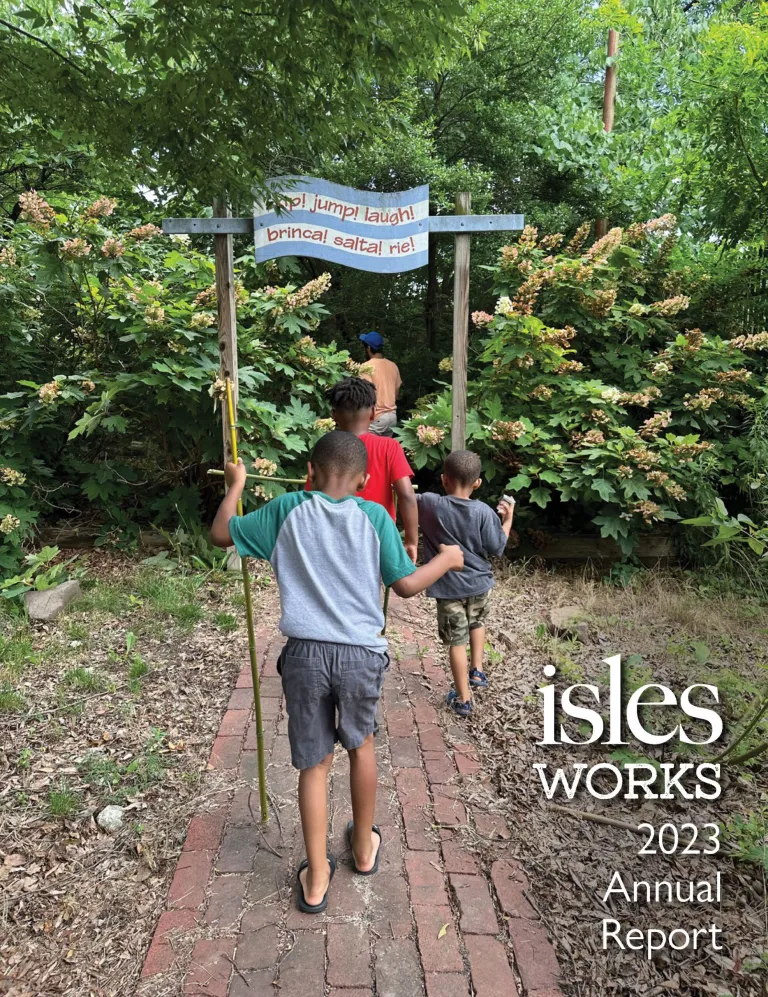
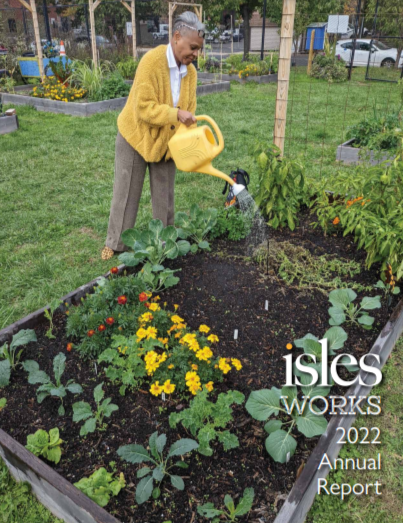
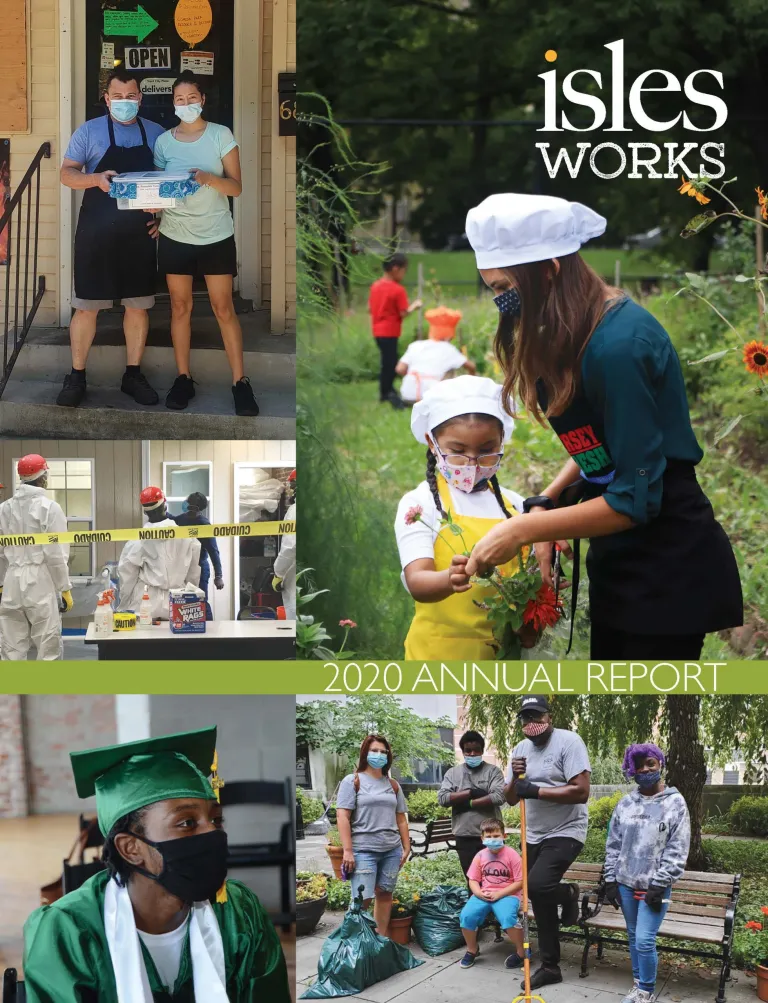
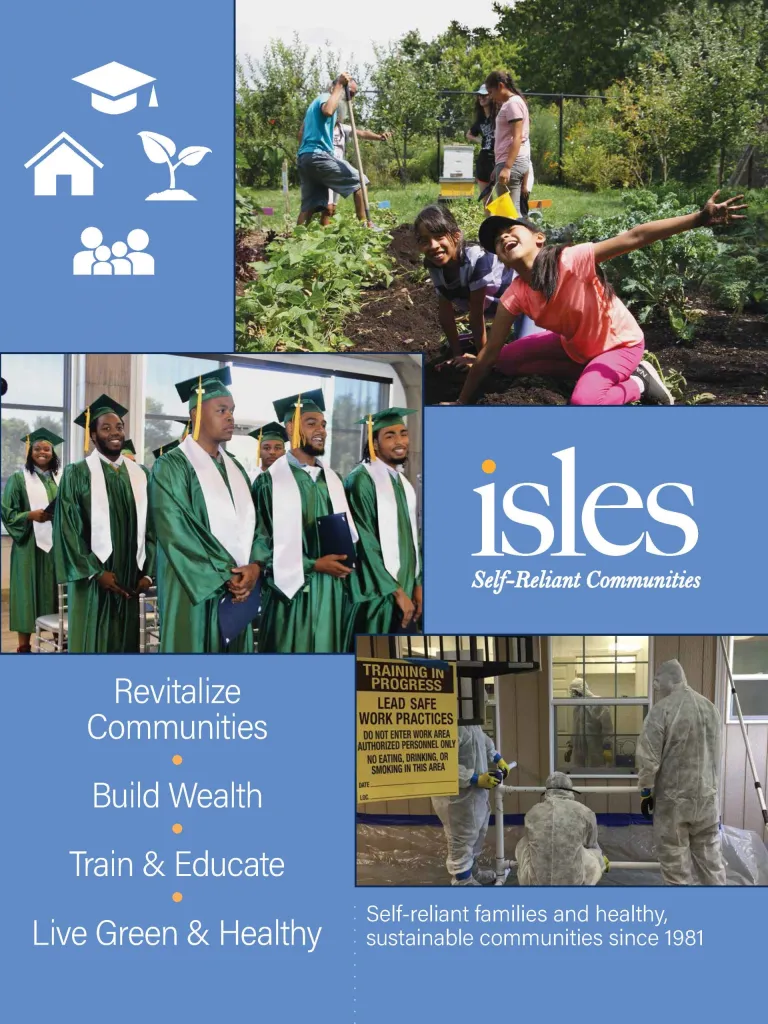
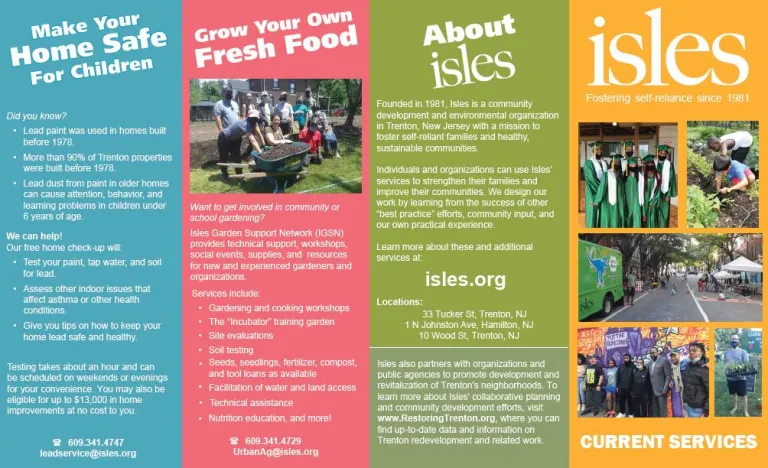
Brochures
Other Publications
-
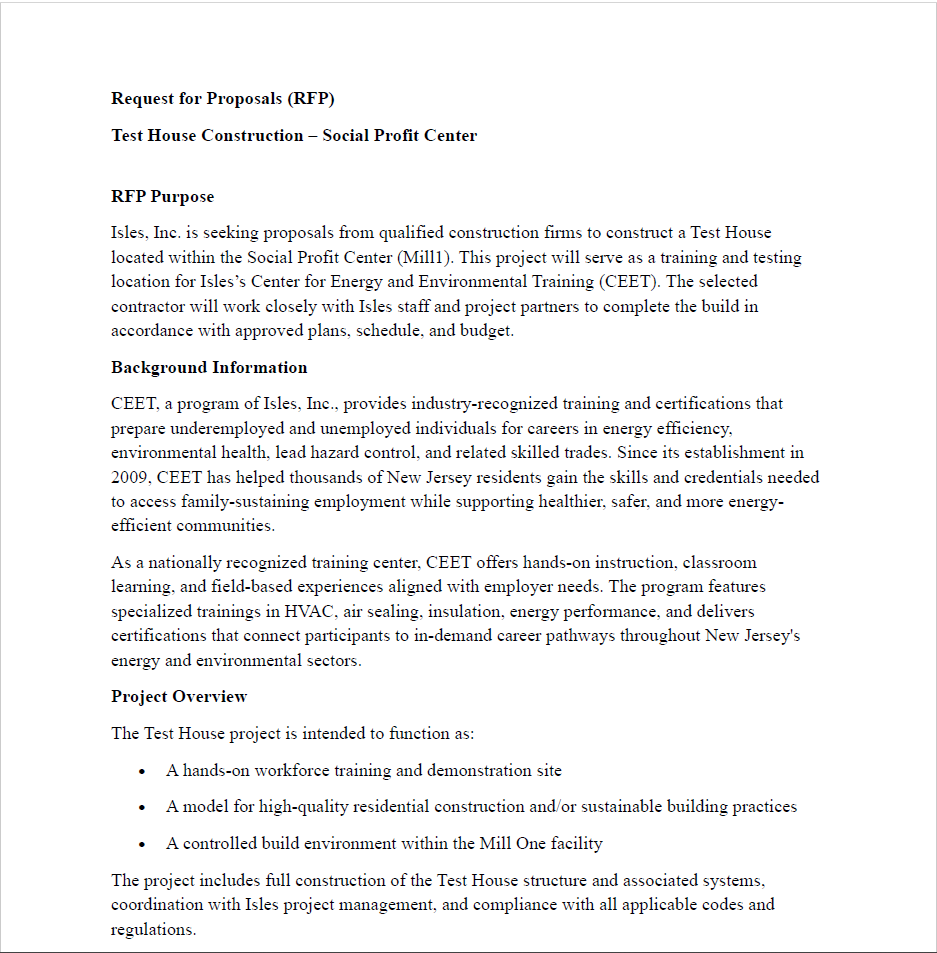
Test House Construction – RFP
-
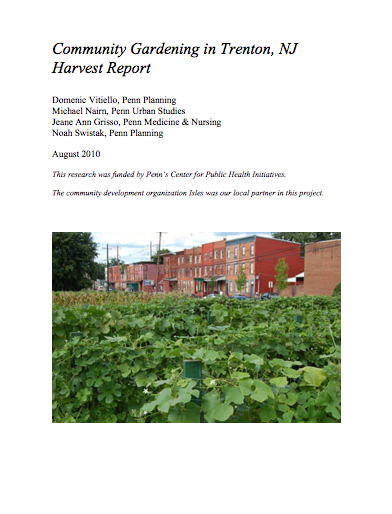
“Community Gardening Harvest”
University of Pennsylvania
Center for Public Health Initiatives -
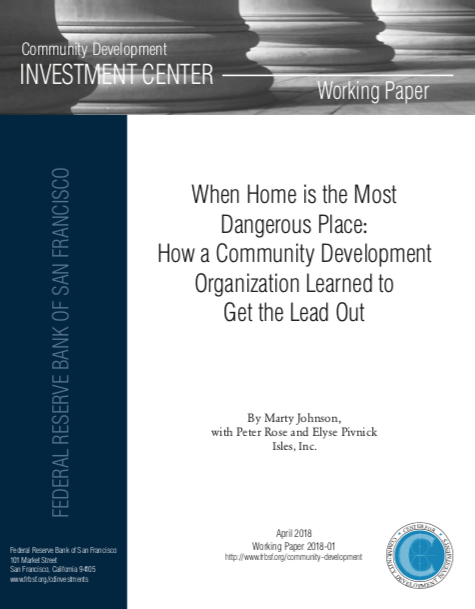
“Get The Lead Out”
Federal Reserve Bank
of San Francisco -
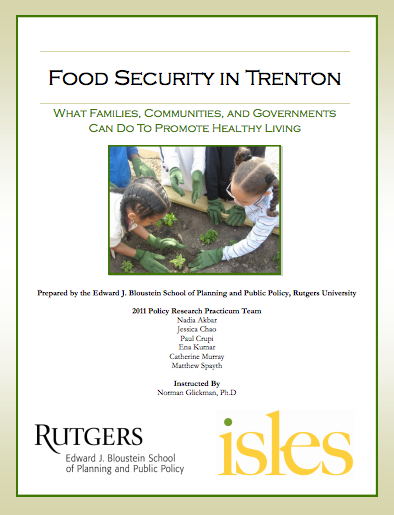
“Food Security in Trenton”
Rutgers University
Edward J. Bloustein School
of Planning and Public Policy -
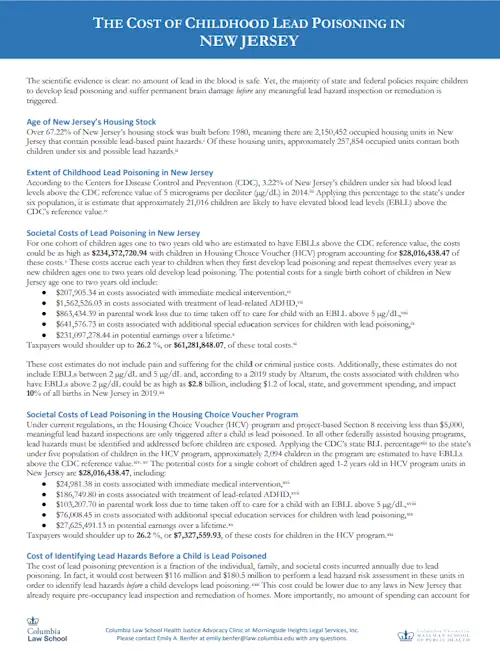
“Cost of Childhood Lead Poisoning”
Columbia Law School -
“Lead in Drinking Water”
Jersey Water Works -
“Building a Culture of Health”
Rutgers University
Robert Wood Johnson Foundation