
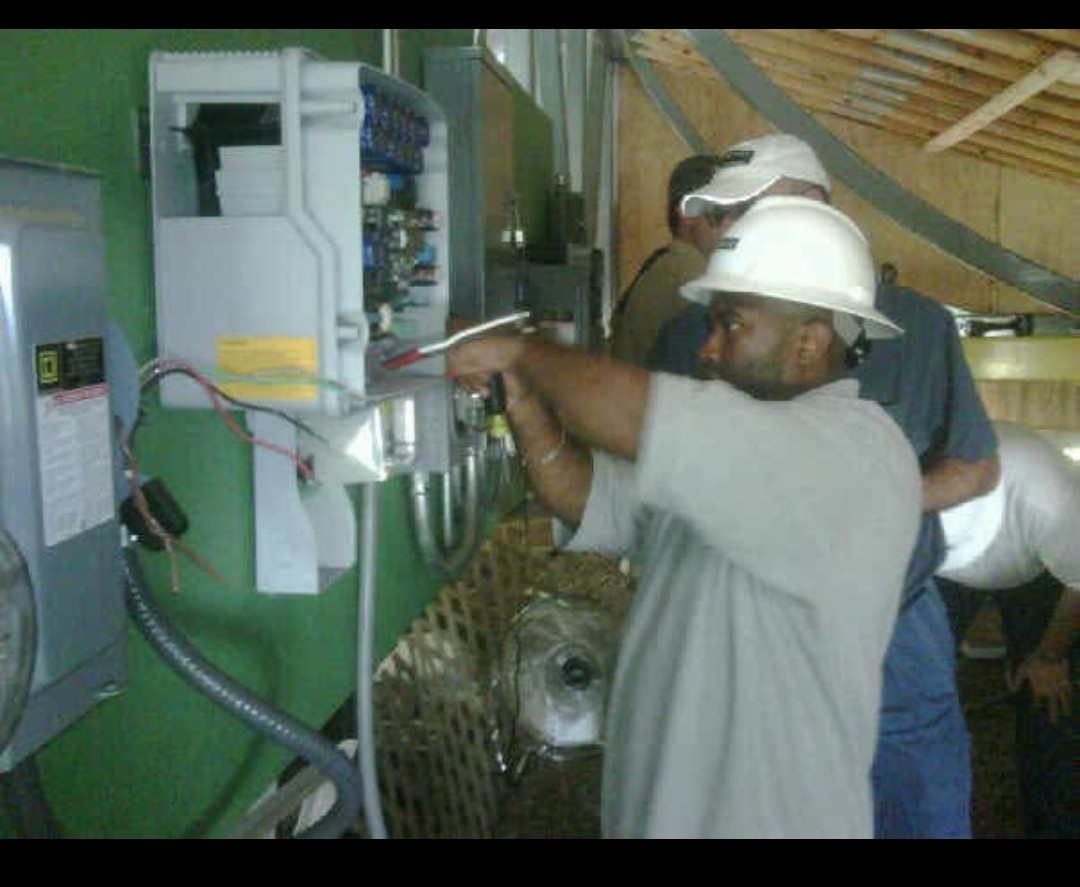
The Trenton native came home from prison in 1997 with a single goal. He has spent a quarter century at the community development nonprofit helping others find their footing.
Andre Thomas settled on a mantra the year he walked out of prison, and he has lived by it ever since.
“Where there is no path, create a path and leave a trail,” he said. “That was my goal.”
He has spent 25 years doing exactly that at Isles, the Trenton-based community development and environmental nonprofit, where he now serves as Director of Training and Support.
“Andre is Isles at its best,” said Sean Jackson, CEO of Isles. “He came to this work through his own experience, and for 25 years he has turned that into opportunity for thousands of people across Trenton and beyond. His journey is a reminder of what becomes possible when we invest in people, and we are grateful for every trail he has blazed and helped others find.”
Thomas came home in 1997 after serving time that began in his early 20s. He was 28, and he came out with one clear aspiration: to make an impact in his community. He took a warehouse job, climbed to traffic manager at a facility in Cranbury, and finished five years of parole while he figured out the rest.
The community piece came through his father. The two of them had a connection at Mill Hill and began going into Trenton schools to talk with young people. Thomas had a story worth telling, and he knew which kids needed to hear it, because he had been one of them.
He grew up in West Trenton, a gifted and talented student who coasted a little while nobody watched too closely. Then his mother’s marriage came apart, and the household went from two paychecks to one.
“I could hear her stressing. I could hear her crying about trying to maintain,” he said. “I didn’t want to be a burden, so I tried to lighten the load, at least I thought, in my young mind. I didn’t realize I was making the load heavier.”
Crack had just hit Trenton hard. Thomas caught his first charge at 15.
“It seemed like a viable option to a young mind that comes from a struggling family,” he said. “By the time my parents got wind of it, I was knee-deep in the streets. There was nothing that was going to take me off that path except myself.”
That is the part he wanted young people to hear. Not a warning so much as a mirror.
His volunteering got him noticed. Steven Rosen, then executive director at Mill Hill, brought him onto the team, and Thomas helped develop Trenton PEERS, a Mill Hill youth leadership program that trains high school students as peer educators and still runs today. While recruiting for it, he kept crossing paths with Isles. He sat in on a community orientation course, met founder Marty Johnson, and recognized the work he had been trying to do all along in the organization’s mission: to foster self-reliant families and healthy, sustainable communities.
In 2001, Isles called. He joined the YouthBuild program as operations manager, a title that in practice meant motivator, disciplinarian, and counselor to young people ages 16 to 24 who were struggling to find their way. He ran the morning meetings, made sure students got where they needed to be, and helped them understand the why. He did it from 2001 to 2008, and he still mentors some of those students, now grown into fathers, community workers, and professionals.
“It’s hard to know when the seeds that we plant into the young people are going to take root,” he said. “They come to us broken. They come to us not really sure where their journey is going to take them. They come to us with all sorts of barriers.”
He has the stories anyway. One former student arrived as a young single mother full of anger and went on to earn a master’s degree and do community work of her own. She credits the turn to her time at Isles.
Around 2008, Isles asked Thomas to help build something new. The Center for Energy and Environmental Training, or CEET, launched in 2009 as a green-jobs training program for unemployed and underemployed residents. Thomas knew nothing about building science when he started.
“I was a baby in it,” he said.
He learned anyway, earned his certification through the Building Performance Institute, and turned around and taught it. He has taught energy efficiency since 2009 and lead abatement since 2017. He built the model Isles uses to assess homes, then trained the staff who now do the work. CEET has since trained thousands of New Jersey residents and remains a BPI testing center.
The pivot became its own kind of lesson.
“You can redevelop yourself, or pivot if necessary, and learn a thing to be able to teach a thing,” he said. “Learn a thing so you can have impact in that particular world.”
He stayed because of an idea he keeps returning to. Prison, he says, is not only the kind with bars.
“There’s a lot of proverbial prisons,” he said. “People are trapped in their habits, they’re trapped in their behaviors, they’re trapped in poverty. Some of the work we do here helps pull people out of some of those traps. Sometimes they’re trapped in their own homes that aren’t healthy.”
Twenty-five years in, that is the accomplishment he names first. Not a title or a certification, but a trail.
“I was able to help a lot of people find their way,” he said. “I use my example. I use my journey to be a teaching tool of what’s possible.”
Then, because the work is not finished, he goes back to teaching.